Realme vs Redmi (2026): Which Is Better for Budget Buyers in India?
Realme vs Redmi (2026): Which Is Better for Budget Buyers in India?
In this article
Design & Build Quality
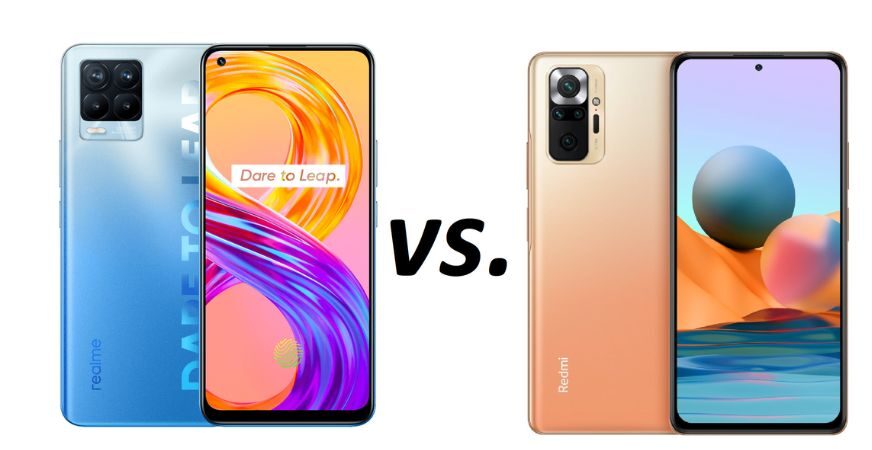
Realme treats design as a selling point. Phones like the Narzo series come in bold colour options with textured vegan leather finishes, glass backs with gradient effects, and an aesthetic that looks more expensive than it costs. If you care how your phone looks — and at ₹12,000, most buyers do — Realme wins this category clearly.
Redmi plays it straight. The Redmi 13 and Note 14 series are solid, well-built phones with conservative designs. Nothing flashy, nothing that turns heads — but nothing that feels cheap either. The build is reliable and practical.
The honest take: Realme phones look significantly better on a desk or in photos. Redmi phones age better in hand — they don’t show smudges and scratches as dramatically. If you use a case (most people do), design matters less.
Choose Realme if aesthetics matter. Choose Redmi if you want a no-nonsense build that stays looking clean.
Software — Realme UI vs HyperOS 2.0
This is the most personal category — and the most debated in Indian tech communities.
Realme UI 6.0 is cleaner. Fewer pre-installed apps, less visual clutter, and animations that feel snappy even on mid-range processors. The interface stays out of your way. For users who want a phone that just works without customising every setting, Realme UI is the better out-of-box experience.
HyperOS 2.0 (which replaced MIUI on Redmi phones) is more ambitious. AI features are woven throughout — AI call noise reduction, sketch-to-image tools, smart shortcuts, Lock Screen 2.0 with video wallpapers. It’s the more feature-rich OS. It’s also heavier — it uses more RAM and can feel slightly slower on base configurations.
The bloatware question: Both ship with pre-installed apps. Realme UI has fewer third-party apps but includes its own suite. HyperOS has more aggressive notifications from built-in apps, though these can be turned off. Neither is as clean as stock Android.
| Brand | OS Updates | Security Updates |
|---|---|---|
| Realme (2025+ flagships) | 3 years | 4 years |
| Realme (Narzo/C-series) | 1–2 years | 2–3 years |
| Redmi (select models) | Up to 6 years | Up to 6 years |
| Redmi (budget tier) | 2–3 years | 3–4 years |
Redmi’s 6-year update commitment (announced in 2025 and rolling out across models in 2026) is the most aggressive update policy in the budget Android market. If you’re buying a phone you plan to use for 3–4 years, this matters more than most buyers realise.
Choose Realme UI if you want a clean, simple interface. Choose HyperOS if you want AI features and a longer software support window.
Camera Performance
Both brands put 50MP main cameras in their ₹12,000–₹15,000 phones. The megapixel count is almost identical. The difference is in how they process photos.
Realme uses AI post-processing aggressively. Photos come out vibrant, punchy, and immediately shareable — colours are saturated, skies are deepened, and portraits get smooth skin rendering. For social media, WhatsApp, and Instagram, Realme photos look great directly from the gallery.
Redmi tunes for accuracy. Colours are more natural, detail retention in highlights is better, and night mode produces less noise without the over-smoothing that AI processing introduces. If you print photos or look at them on a large screen, Redmi’s output holds up better.
Low-light comparison: The Redmi Note 14 series’ night photography is notably better than the Narzo 90x at the same price. The Realme’s AI night mode brightens aggressively but introduces colour noise in shadows. Redmi’s approach is more conservative but more accurate.
Selfie cameras: Largely similar across both brands at this price point — 8MP to 16MP front cameras with AI beautification. Realme applies more processing by default; Redmi is more natural.
Choose Realme for vibrant, social-media-ready photos. Choose Redmi for accurate, detailed photography that holds up under scrutiny.
Battery Life & Charging
This is where Realme pulls ahead — and it’s not close at the top end.
Realme Narzo Power 5G ships with a 10,001mAh battery and 80W fast charging — the largest battery in the under-₹15,000 segment by a significant margin. 80W charging takes the battery from 0 to 80% in approximately 36 minutes. For buyers who need all-day-plus battery life, nothing in this price range comes close.
The standard Narzo 90x brings a 7,000mAh battery with 33W charging — still significantly larger than Redmi’s offering at the same price.
Redmi’s approach is different — optimisation over capacity. The Note 14 SE’s 5,110mAh battery with HyperOS power management consistently delivers 12–14 hours of screen-on time. Redmi phones use their battery more efficiently; Realme phones simply have more of it.
Real-world impact:
- Heavy user — gaming, video, maps all day: Realme (raw capacity wins)
- Moderate user — calls, social media, browsing: Tie (both last a full day)
- Light user — calls and messaging only: Redmi (efficiency means less waste)
- Frequent traveller / no charger access: Realme (7,000–10,000mAh = 2 days)
Choose Realme if battery anxiety is real for you. Choose Redmi if you’re a moderate user who charges every night anyway.
Performance & Gaming
Both brands use MediaTek Dimensity processors at the ₹12,000–₹15,000 tier in 2026. Raw performance is broadly similar for everyday tasks — social media, browsing, video streaming, and casual gaming.
The difference shows up in sustained performance during extended gaming sessions.
Redmi handles thermal management better — the HyperOS game mode throttles background processes effectively, maintaining frame rates in BGMI and Free Fire for longer without the phone becoming uncomfortably warm.
Realme phones tend to run warmer under sustained gaming load. The larger battery also adds mass and slight thickness compared to slimmer Redmi builds — noticeable during extended gaming sessions.
For casual gaming and everyday use, the performance gap is negligible. For competitive BGMI players who game 2+ hours daily, Redmi’s thermal management gives it a slight edge.
After-Sales Service — The 2026 Game Changer
This category looked very different just one year ago.
Before 2026: Realme’s independent service network was one of its biggest weaknesses. Service centers were concentrated in metros, wait times were long, and warranty disputes were a common complaint on Indian Reddit communities.
In 2026: Realme rejoined Oppo as a sub-brand — and with that came access to Oppo’s service network. The result is a reported 500% increase in service center availability across India, including Tier 2 and Tier 3 cities. Realme Care+ extended protection plans also launched alongside this change.
Redmi (Xiaomi network): Redmi’s service infrastructure has always been one of its strengths. Xiaomi expanded premium service centers to 15 new cities in 2026 and has a well-established parts supply chain. Historically more reliable than Realme’s independent network.
Current state (2026): The gap has closed dramatically. Both brands now offer comparable service coverage in most Indian cities. If you’re in a major metro, both are fine. In smaller towns, check the specific service center availability for each brand in your area before deciding.
Common Complaints — What Indian Buyers Actually Say
- Realme complaints (from Indian communities):
- Pre-merger service center experience was frustrating (less relevant now)
- Realme UI occasional software bugs on first launch of new OS versions
- Charging adapters have had quality control issues in some batches
- Lower-tier C-series models feel plasticky despite premium-looking design on paper
- Redmi complaints (from Indian communities):
- HyperOS notification spam from built-in apps (manageable but annoying out of box)
- Some Redmi 13C users reported display quality below expectations for HD+ panel
- Software update rollouts for budget models are slower than advertised
- 18W charging on base Redmi 13C feels slow compared to Realme’s 33W+ standard
Who Should Buy Which Brand
Buy Realme if you:
- Want the most battery life per rupee
- Care about design and how your phone looks
- Prefer a cleaner, simpler UI out of the box
- Take a lot of casual photos for social media
- Need fast charging (Realme charges faster across all price tiers)
Buy Redmi if you:
- Want an AMOLED display at the lowest possible price
- Play mobile games seriously and care about thermal performance
- Want the longest software update support window (Redmi’s 6-year policy)
- Prefer natural, accurate camera output over AI-enhanced vibrancy
- Plan to keep your phone for 3+ years
The Head-to-Head Verdict by Budget
| Budget | Realme Pick | Redmi Pick | Our Recommendation |
|---|---|---|---|
| Under ₹10,000 | Realme C65 5G | Redmi 13C | Redmi 13C (better value) |
| ₹10,000–₹13,000 | Realme Narzo 90x 5G | Redmi 13 5G | Realme Narzo 90x (better battery + design) |
| ₹13,000–₹15,000 | Realme P1 5G | Redmi Note 14 SE 5G | Redmi Note 14 SE (AMOLED + updates) |
Frequently Asked Questions
Q: Which brand has better resale value in India?
A: Redmi (Xiaomi) phones hold resale value slightly better — the brand recognition and larger user base means more buyers on OLX and Cashify. Realme’s resale is improving but still trails Redmi at most price points.
Q: Is Realme still a good brand after the Oppo merger?
A: Yes — the merger is a net positive for buyers. Realme gets Oppo’s service network and R&D backing while maintaining its own product identity and price positioning. Software and product decisions remain Realme-specific.
Q: Which is better for students — Realme or Redmi?
A: For students who want a good-looking phone with long battery life: Realme. For students who want a phone they’ll use for 4 years with software updates: Redmi. Both work well for online classes, note-taking apps, and casual use.
Q: Do Redmi phones still have ads in MIUI/HyperOS?
A: HyperOS has reduced ads compared to MIUI but hasn’t eliminated them completely. Built-in apps like the browser, file manager, and security app show occasional promotional content. These can be disabled in settings — it takes 10 minutes on first setup.
Q: Which brand has better 5G performance in India?
A: Both use MediaTek Dimensity chips with comparable 5G band support for Indian networks (Jio, Airtel, Vi). 5G performance difference between brands at the same price point is negligible.
Final Verdict
There’s no single winner — Realme and Redmi are genuinely good for different buyers.
Realme is the better buy if you want the most battery life, the best-looking phone, and the fastest charging in the sub-₹15,000 bracket. The Narzo 90x at ₹12,499 is one of the best value phones in India right now for battery-first users.
Redmi is the better buy if you want an AMOLED display, longer software support, and better camera accuracy. The Note 14 SE at ₹13,999 is the most complete budget smartphone under ₹15,000 for buyers who plan to keep their phone for 3+ years.
If you’re still torn: check which one has a service center closer to your home. At this price point, after-sales support is often what makes or breaks the ownership experience.

Pooja Garg is a tech and lifestyle writer at Gadgistry.com, specializing in smartphones, smart home devices, and kitchen appliances. She focuses on simplifying product features into clear, practical insights to help readers make informed buying decisions.
Her work highlights real-world usability, value for money, and the latest trends in everyday technology, making it easier for readers to choose the right gadgets for their needs.